Module 14: Specific Indications for Treatment of Common Dermatological Conditions
This module revisits the earlier modules to summarize the treatment strategies.
Inflammatory Skin Disorders
Section titled “Inflammatory Skin Disorders”1. Atopic Dermatitis (Eczema)
Section titled “1. Atopic Dermatitis (Eczema)”Indications for Treatment:
-
Emollients: For all patients to restore barrier function and prevent flares.
-
Topical corticosteroids: Indicated for active flares with inflammation and pruritus; potency selected according to site and severity.
-
Topical calcineurin inhibitors (e.g., tacrolimus): For sensitive areas (face, eyelids) or steroid-sparing in chronic AD.
-
Systemic therapy: Indicated in moderate-to-severe AD refractory to topical measures or with widespread involvement; includes systemic corticosteroids (short-term), cyclosporine, methotrexate, and biologics like dupilumab.
-
Antihistamines: For pruritus control and sleep improvement.
2. Contact Dermatitis
Section titled “2. Contact Dermatitis”Indications for Treatment:
-
Avoidance: Essential; indicated whenever specific irritants or allergens are identified.
-
Topical Corticosteroids: For acute inflammation and symptomatic relief.
-
Barrier creams/protective gloves: For occupational or recurrent irritant contact dermatitis.
-
Referral for patch testing: Indicated if diagnosis is unclear or for persistent/recalcitrant cases.
3. Seborrhoeic Dermatitis
Section titled “3. Seborrhoeic Dermatitis”Indications for Treatment:
-
Topical antifungals (ketoconazole): For yeast-related scaling, especially on the scalp and face.
-
Mild topical corticosteroids: For symptomatic inflammation during flares.
-
Medicated shampoos: For scalp involvement to control dandruff and inflammation.
-
Systemic therapy: Rarely indicated except in severe refractory cases or associated immunosuppression (e.g., HIV).
4. Psoriasis
Section titled “4. Psoriasis”Indications for Treatment:
-
Topical therapies: Mild to moderate localized plaque psoriasis.
-
Phototherapy: Moderate plaque psoriasis not adequately controlled by topicals.
-
Systemic therapies (methotrexate, cyclosporine, acitretin): Severe, extensive, or refractory psoriasis with significant impairment.
-
Biologics: Indicated in moderate-to-severe psoriasis unresponsive to conventional systemic agents, or with psoriatic arthritis involvement.
-
Specific agents:
-
TNF-α inhibitors for joint and skin disease.
-
IL-17/IL-23 inhibitors for resistant or severe disease.
-
5. Psoriatic Arthritis
Section titled “5. Psoriatic Arthritis”Indications for Treatment:
-
NSAIDs: Mild joint symptoms.
-
DMARDs (methotrexate, sulfasalazine): Persistent or progressive arthritis.
-
Biologics: Moderate-to-severe arthritis or inadequate response to conventional DMARDs.
Acne and Rosacea
Section titled “Acne and Rosacea”1. Acne Vulgaris
Section titled “1. Acne Vulgaris”Indications for Treatment:
-
Topical retinoids and benzoyl peroxide: First line for mild to moderate acne.
-
Topical antibiotics: Adjunct to prevent resistance, used with benzoyl peroxide.
-
Oral antibiotics (doxycycline, minocycline): Moderate to severe inflammatory acne or widespread lesions.
-
Hormonal therapy (combined oral contraceptives, spironolactone): Female patients with hormonal acne or menstrual flare pattern.
-
Oral isotretinoin: Severe nodulocystic acne, scarring acne, or recalcitrant cases unresponsive to other treatments. Requires monitoring due to teratogenicity.
2. Rosacea
Section titled “2. Rosacea”Indications for Treatment:
-
Topical metronidazole or ivermectin: First line for symptomatic papulopustular rosacea.
-
Oral doxycycline (low dose): Moderate to severe inflammatory rosacea or when topical therapy is inadequate.
-
Brimonidine gel: Persistent erythema (erythematotelangiectatic subtype).
-
Laser/IPL: Treatment of telangiectasia or phyma after inflammation is controlled.
Skin Infections
Section titled “Skin Infections”1. Impetigo
Section titled “1. Impetigo”Indications for Treatment:
-
Topical mupirocin or fusidic acid: Localized, mild infection without systemic symptoms.
-
Oral antibiotics (cloxacillin, cephalexin): Extensive disease, systemic symptoms, or non-responsive to topical therapy.
2. Cellulitis
Section titled “2. Cellulitis”Indications for Treatment:
-
Oral antibiotics (amoxicillin-clavulanate, clindamycin): Mild to moderate cellulitis without systemic toxicity.
-
Intravenous antibiotics: Severe cellulitis, systemic symptoms, immunocompromised host, or failure of oral therapy.
-
Hospital admission: Signs of systemic toxicity, rapid progression, immunosuppression, or comorbidities.
3. Herpes Simplex
Section titled “3. Herpes Simplex”Indications for Treatment:
-
Oral antivirals (acyclovir, valacyclovir): Primary or recurrent infections with severe symptoms, extensive disease, or immunocompromised patients.
-
Topical antivirals: Mild, localized disease in immunocompetent individuals.
4. Tinea (Dermatophytosis)
Section titled “4. Tinea (Dermatophytosis)”Indications for Treatment:
-
Topical antifungals: Localized skin infections without hair or nail involvement.
-
Oral antifungals (griseofulvin, terbinafine): Scalp or nail infections, extensive or refractory skin infections.
5. Candidiasis
Section titled “5. Candidiasis”Indications for Treatment:
-
Topical antifungals (nystatin, clotrimazole): Localized skin or mucosal infection.
-
Oral fluconazole: Recurrent vulvovaginal candidiasis, extensive mucosal involvement, or immunocompromised patients.
6. Scabies
Section titled “6. Scabies”Indications for Treatment:
-
Topical permethrin 5% cream: Standard treatment for all cases.
-
Oral ivermectin: Crusted scabies, treatment failure, or when topical therapy is contraindicated or impractical.
-
Simultaneous treatment of contacts: To prevent reinfection.
Table 14.1: Updated Antibiotic Treatments in Dermatology (2025)
| Condition | First-Line Antibiotic | Alternatives | Notes |
|---|---|---|---|
| Acne Vulgaris | Topical clindamycin + benzoyl peroxide | Oral doxycycline, minocycline | Avoid monotherapy; limit oral antibiotics to ≤3 months |
| Impetigo | Topical mupirocin | Ozenoxacin, oral cephalexin | Use oral agents for extensive or resistant cases |
| Cellulitis (non-purulent) | Amoxicillin-clavulanate | Cephalexin, clindamycin | MRSA coverage if risk factors present |
| Cellulitis (purulent/MRSA) | Doxycycline | Trimethoprim-sulfamethoxazole, clindamycin | Culture-guided therapy recommended |
| Scabies (secondary infection) | Topical fusidic acid | Oral cephalexin, clindamycin | Treat the underlying infestation concurrently |
| Antibiotic Stewardship | Targeted therapy | Short duration, culture-based | Avoid unnecessary use; consider non-antibiotic options |
Drug Reactions and Emergencies
Section titled “Drug Reactions and Emergencies”1. Drug Eruptions
Section titled “1. Drug Eruptions”Indications for Treatment:
-
Mild morbilliform eruptions: Discontinuation of offending drug, symptomatic treatment with antihistamines and topical corticosteroids.
-
Severe drug reactions (DRESS, SJS/TEN): Hospital admission, systemic corticosteroids or immunomodulators, supportive care in ICU or burns unit.
2. Stevens-Johnson Syndrome (SJS)
Section titled “2. Stevens-Johnson Syndrome (SJS)”Indications for Treatment:
-
Emergency admission: For all suspected SJS/TEN due to risk of rapid progression.
-
Immediate withdrawal of the culprit drug.
-
Supportive ICU care: Fluids, wound management, pain control, multidisciplinary input.
3. Anaphylaxis
Section titled “3. Anaphylaxis”Indications for Treatment:
-
IM adrenaline: Immediately for all suspected anaphylaxis cases.
-
Adjunctive therapy: Oxygen, intravenous fluids, antihistamines, corticosteroids.
Procedures in Dermatology
Section titled “Procedures in Dermatology”1. Skin Scrapings and KOH Preparation
Section titled “1. Skin Scrapings and KOH Preparation”Indications:
- Diagnosis of suspected superficial fungal infections (tinea, candidiasis).
2. Punch Biopsy
Section titled “2. Punch Biopsy”Indications:
-
Diagnosis of suspected skin malignancies and uncertain inflammatory dermatoses.
-
Confirmation of bullous diseases.
3. Cryotherapy
Section titled “3. Cryotherapy”Indications:
- Viral warts, actinic keratoses, seborrhoeic keratoses, superficial basal cell carcinomas (selected cases).
4. Patch Testing
Section titled “4. Patch Testing”Indications:
-
Evaluation of suspected allergic contact dermatitis.
-
Chronic or refractory dermatitis with unclear aetiology.
Dermatology in Systemic Disease
Section titled “Dermatology in Systemic Disease”Specific Indications for Dermatologic Evaluation and Treatment:
-
Acanthosis nigricans: Investigation for insulin resistance or occult malignancy when adult-onset.
-
Dermatomyositis: Skin changes prompt cancer screening.
-
Necrobiosis lipoidica: Requires glycaemic control and local therapy for skin lesions.
-
Cutaneous lupus erythematosus: Use of antimalarials and immunosuppressants indicated based on severity.
Skin Cancer
Section titled “Skin Cancer”Treatment Indications
Section titled “Treatment Indications”- Basal Cell Carcinoma: Surgical excision for localized lesions; Mohs surgery for facial or high-risk locations.
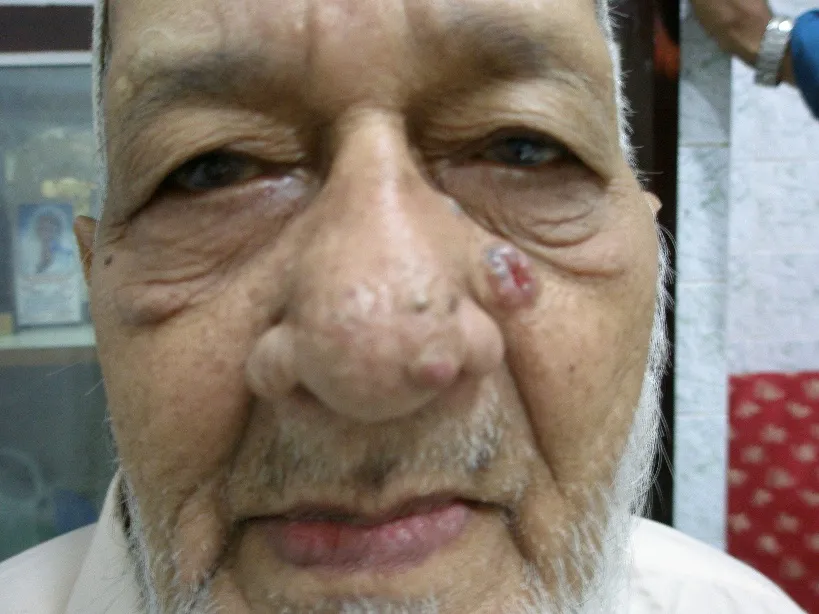
Fig. 14.1: Basal Cell Carcinoma
Image sourced from Global Skin Atlas.
- Squamous Cell Carcinoma: Excision with margins; adjuvant radiotherapy for aggressive or inoperable lesions.
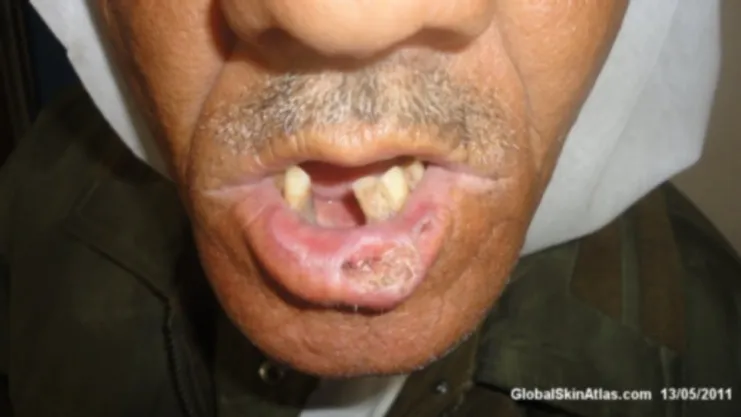
Fig. 14.2: Squamous Cell Carcinoma and Lichen Planus
Image sourced from Global Skin Atlas.
- Melanoma: Wide local excision based on Breslow thickness; sentinel node biopsy for staging. Systemic immunotherapy or targeted therapy in advanced disease.
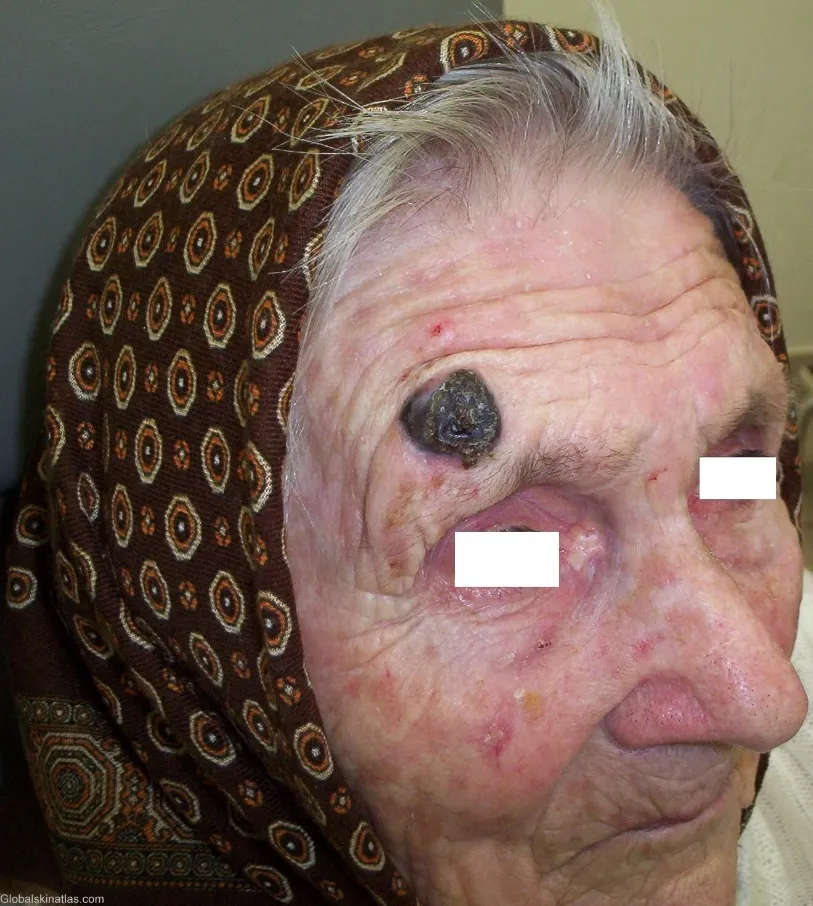
Fig. 14.3: Melanoma
Image sourced from Global Skin Atlas.
Multiple Choice Questions
Section titled “Multiple Choice Questions”Tap an answer to check yourself — the correct option and an explanation appear once you choose.
Q1 A patient with moderate-to-severe atopic dermatitis has not responded adequately to topical corticosteroids and emollients. Which of the following systemic agents is most appropriate?
Dupilumab is a biologic indicated for moderate-to-severe atopic dermatitis refractory to topical measures. Topical tacrolimus is a steroid-sparing topical (not systemic), antihistamines alone address pruritus but not disease control, and ketoconazole targets seborrhoeic dermatitis.
Q2 A 22-year-old woman with moderate inflammatory acne and a menstrual flare pattern has not improved with topical retinoids and benzoyl peroxide. Which treatment is most appropriate to add next?
Hormonal therapy — combined oral contraceptives or spironolactone — is specifically indicated for female patients with hormonal acne or menstrual flare patterns. Isotretinoin is reserved for severe nodulocystic or scarring acne, ivermectin is used for rosacea, and fluconazole treats candidiasis.
Q3 A 40-year-old man presents with mild cellulitis of the lower leg without fever or systemic features. Which is the most appropriate initial management?
Oral antibiotics such as amoxicillin-clavulanate are indicated for mild to moderate cellulitis without systemic toxicity. IV antibiotics and admission are reserved for severe disease, systemic symptoms, or immunocompromised patients. Mupirocin is for superficial impetigo; permethrin treats scabies.
Q4 A patient develops widespread skin blistering and mucosal erosions two weeks after starting a new antibiotic. Which is the most important immediate step?
Mucocutaneous blistering with erosions following a new drug indicates suspected Stevens-Johnson Syndrome/TEN. Immediate withdrawal of the offending drug and emergency admission for supportive ICU care is the required response — this condition carries significant mortality without prompt intervention.
Q5 Which procedure is most appropriate for confirming a diagnosis of suspected superficial tinea corporis?
Skin scraping with KOH preparation is indicated for suspected superficial fungal infections such as tinea and candidiasis — it reveals hyphae under microscopy. Punch biopsy is for malignancy or uncertain inflammatory dermatoses; patch testing is for allergic contact dermatitis; cryotherapy is a treatment, not a diagnostic test.
Short Answer Questions
Section titled “Short Answer Questions”SAQ 1: Stepped Treatment of Psoriasis
Section titled “SAQ 1: Stepped Treatment of Psoriasis”SAQ
Outline the stepped approach to treatment for plaque psoriasis, from mild to severe disease.
Reveal model answer
-
Topical therapies — first line for mild to moderate localized plaque psoriasis.
-
Phototherapy — indicated for moderate plaque psoriasis not adequately controlled by topical agents alone.
-
Systemic therapies (methotrexate, cyclosporine, acitretin) — for severe, extensive, or refractory psoriasis with significant impairment.
-
Biologics — indicated in moderate-to-severe psoriasis unresponsive to conventional systemic agents, or when psoriatic arthritis is present. Specific agents include TNF-α inhibitors for joint and skin disease, and IL-17/IL-23 inhibitors for resistant or severe disease.
SAQ 2: Treatment Indications for Scabies
Section titled “SAQ 2: Treatment Indications for Scabies”SAQ
Describe the treatment indications for scabies, including when oral therapy is preferred and the importance of contact treatment.
Reveal model answer
-
Topical permethrin 5% cream is the standard treatment for all cases of scabies.
-
Oral ivermectin is indicated for crusted (Norwegian) scabies, treatment failure with topical therapy, or when topical application is contraindicated or impractical.
-
Simultaneous treatment of all close contacts is required to prevent reinfection, regardless of whether contacts are symptomatic.
SAQ 3: Indications for Systemic Therapy in Atopic Dermatitis
Section titled “SAQ 3: Indications for Systemic Therapy in Atopic Dermatitis”SAQ
When is systemic therapy indicated in atopic dermatitis, and what options are available?
Reveal model answer
Systemic therapy is indicated in moderate-to-severe atopic dermatitis that is refractory to topical measures, or with widespread involvement.
Available options include:
- Systemic corticosteroids — short-term use for acute severe flares.
- Cyclosporine — for refractory moderate-to-severe disease.
- Methotrexate — as a conventional systemic agent.
- Biologics (dupilumab) — for patients who fail or cannot tolerate conventional systemic agents.
- Antihistamines — as adjunctive therapy for pruritus control and sleep improvement.
OSCE Stations
Section titled “OSCE Stations”OSCE 1: Counselling on Isotretinoin for Severe Acne
Section titled “OSCE 1: Counselling on Isotretinoin for Severe Acne”Scenario: A 19-year-old female student has been diagnosed with severe nodulocystic acne that has not responded to oral antibiotics. The dermatologist has recommended oral isotretinoin.
Task: Counsel her on the indications for isotretinoin, the monitoring required during treatment, and key safety considerations.
Self-assess against checklist
Tick each point you covered, then check your score.
- States that isotretinoin is indicated for severe nodulocystic acne, scarring acne, or acne recalcitrant to other treatments.
- Explains that teratogenicity is a major safety concern — pregnancy must be excluded before starting and prevented throughout treatment.
- Mentions that monitoring is required during treatment (references monitoring requirement from the module).
- Advises on the need for adherence and regular follow-up.
- Checks understanding and invites questions.
OSCE 2: Managing a Drug Reaction
Section titled “OSCE 2: Managing a Drug Reaction”Scenario: A 30-year-old man develops a widespread morbilliform rash two days after starting a new antibiotic for a urinary tract infection. He has no mucosal involvement, no blistering, and feels otherwise well.
Task: Assess the severity of the reaction, decide on management, and counsel the patient.
Self-assess against checklist
Tick each point you covered, then check your score.
- Identifies this as a mild morbilliform drug eruption (no mucosal or blistering features).
- States that the offending drug should be discontinued.
- Recommends symptomatic treatment with antihistamines and topical corticosteroids.
- Distinguishes this from a severe reaction (DRESS, SJS/TEN) which would require hospital admission, systemic corticosteroids or immunomodulators, and ICU/burns unit care.
- Documents the drug allergy and advises the patient to report it to future prescribers.
- Advises on follow-up if symptoms worsen or mucosal involvement develops.
OSCE 3: Explaining a Dermatological Procedure
Section titled “OSCE 3: Explaining a Dermatological Procedure”Scenario: A 45-year-old woman has a pigmented lesion on her back that the dermatologist suspects may be a melanoma. She has been scheduled for a punch biopsy.
Task: Explain to the patient what a punch biopsy is, why it is being performed, and what to expect.
Self-assess against checklist
Tick each point you covered, then check your score.
- Explains that punch biopsy is used to diagnose suspected skin malignancies and uncertain inflammatory dermatoses.
- Describes the procedure in simple terms: a small circular sample of skin is taken under local anaesthetic.
- Explains that the sample is sent for histological examination to confirm the diagnosis.
- Mentions that the result will guide further management (e.g., wide local excision based on Breslow thickness for melanoma, Mohs surgery for high-risk locations).
- Addresses patient concerns and checks understanding.
- States that follow-up will be arranged to discuss results and next steps.