Module 6: Diagnostic Simulations
Learning Objectives
Section titled “Learning Objectives”By the end of this module, students should be able to:
-
Apply clinical reasoning to dermatological presentations using case-based simulations.
-
Differentiate between common causes of similar dermatological symptoms (e.g., erythema, pruritus).
-
Formulate differential diagnoses based on history and physical examination.
-
Select appropriate investigations to confirm the diagnosis.
-
Initiate evidence-based management for common dermatological conditions.
-
Recognize red flags and indications for referral.
Case-Based Clinical Notes
Section titled “Case-Based Clinical Notes”Case 1: “The Red Face”
Section titled “Case 1: “The Red Face””Clinical Scenario: A 42-year-old woman presents with persistent redness over her cheeks and nose, worsened by sun exposure and spicy food. She also reports occasional pustules and a burning sensation.
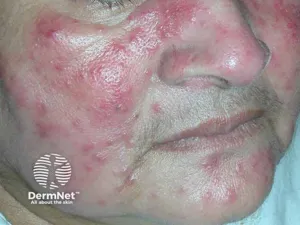
Fig. 6.1: Rosacea — centrofacial erythema and papulopustular lesions
Image sourced from DermNet.
Pathophysiology:
-
Likely rosacea: chronic inflammatory condition with vascular and inflammatory components.
-
Differential diagnoses: seborrheic dermatitis, lupus erythematosus, acne vulgaris, contact dermatitis.
Diagnosis:
-
Clinical diagnosis based on:
-
Persistent centrofacial erythema
-
Flushing, telangiectasia
-
Papules/pustules without comedones
-
-
Rule out lupus (ANA if systemic symptoms).
Management:
-
Trigger avoidance (sun, alcohol, spicy food).
-
Topical metronidazole or ivermectin.
-
Oral doxycycline for moderate-severe cases.
-
Laser therapy for telangiectasia.
-
Patient education on chronicity and flare prevention.
Case 2: “Red Legs”
Section titled “Case 2: “Red Legs””Clinical Scenario: A 60-year-old woman with diabetes presents with a painful, swollen, red left leg. She has a low-grade fever and no trauma history. The redness is warm and tender to the touch.

Fig. 6.2: Cellulitis of the lower leg
Image sourced from DermNet.
Pathophysiology:
-
Likely cellulitis: bacterial infection of dermis and subcutaneous tissue.
-
Differential diagnoses: DVT, venous eczema, erysipelas, contact dermatitis.
Diagnosis:
-
Clinical: erythema, warmth, tenderness, systemic signs.
-
Investigations:
-
FBC, CRP
-
Blood cultures if febrile
-
Doppler US to rule out DVT if needed
-
Management:
-
Oral antibiotics (e.g., amoxicillin-clavulanate).
-
IV antibiotics if systemic signs or comorbidities.
-
Elevation, rest, treat underlying cause (e.g., tinea pedis).
-
Monitor for complications (abscess, necrotizing fasciitis).
Case 3: “The Itchy Vulva”
Section titled “Case 3: “The Itchy Vulva””Clinical Scenario: A 28-year-old woman presents with intense vulvar itching and white curd-like discharge. She recently completed a course of antibiotics.
Pathophysiology:
-
Likely vulvovaginal candidiasis: overgrowth of Candida albicans due to disruption of normal flora.
-
Differential diagnoses: bacterial vaginosis, trichomoniasis, contact dermatitis, lichen sclerosus.
Diagnosis:
-
Clinical: itching, erythema, thick white discharge.
-
Confirm with:
-
Vaginal swab for microscopy (pseudohyphae)
-
pH testing (normal in candidiasis)
-
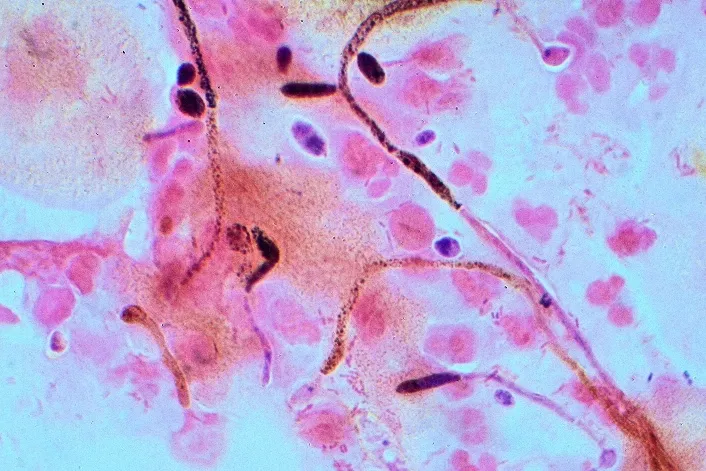
Fig. 6.3: Vaginal swab — pseudohyphae of Candida albicans
Management:
-
Topical azoles (clotrimazole) or oral fluconazole.
-
Avoid irritants (e.g., scented products).
-
Educate on recurrence and hygiene.
-
Consider screening for diabetes if recurrent.
Multiple Choice Questions
Section titled “Multiple Choice Questions”Tap an answer to check yourself — the correct option and an explanation appear once you choose.
Q1 A 45-year-old woman presents with persistent facial redness, flushing, and papules on her cheeks and nose. There are no comedones. What is the most likely diagnosis?
Persistent centrofacial erythema with flushing and papulopustules in the absence of comedones is characteristic of rosacea. Acne vulgaris features comedones and typically affects younger patients. Seborrheic dermatitis causes greasy scale in seborrheic areas. Lupus may cause a malar rash but is distinguished by systemic features and a positive ANA.
Q2 Which of the following is the most appropriate first-line treatment for papulopustular rosacea?
Topical metronidazole is first-line for papulopustular rosacea — it reduces inflammation and papulopustular lesions with a well-established safety profile. Topical corticosteroids are contraindicated as they worsen rosacea with rebound flares. Oral isotretinoin is reserved for refractory phymatous disease. Salicylic acid has no role in rosacea management.
Q3 A 65-year-old woman with type 2 diabetes presents with a swollen, red, tender right lower leg with ill-defined borders, warmth, and a mild fever. She denies trauma. What is the most likely diagnosis?
Erythema with ill-defined borders, warmth, tenderness, and systemic signs (fever) in a diabetic patient is classic for cellulitis — a bacterial infection of the dermis and subcutaneous tissue. DVT causes swelling and pain without surface erythema/fever. Venous stasis dermatitis is bilateral and chronic. Contact dermatitis is non-infectious and typically well-demarcated.
Q4 Which of the following is the most appropriate initial management for uncomplicated cellulitis?
Oral amoxicillin-clavulanate provides broad-spectrum cover against the most common pathogens in cellulitis (Streptococcus pyogenes and Staphylococcus aureus) and is first-line for uncomplicated cases. Fluconazole is antifungal, topical mupirocin covers superficial infections only, and acyclovir is antiviral.
Q5 A 28-year-old woman presents with vulvar itching and thick white discharge after recently completing a course of antibiotics. What is the most likely diagnosis?
Recent antibiotic use disrupts normal vaginal flora, allowing Candida albicans overgrowth — presenting as intense itch with thick, white, curd-like discharge. Bacterial vaginosis causes a thin grey discharge with fishy odour. Trichomoniasis produces frothy yellow-green discharge. Lichen sclerosus causes chronic atrophic skin changes without discharge.
Q6 Which of the following is the most appropriate treatment for uncomplicated vulvovaginal candidiasis?
Topical clotrimazole (an azole antifungal) is first-line for uncomplicated vulvovaginal candidiasis — effective, well-tolerated, and available without prescription. Oral fluconazole is an alternative single-dose option. Doxycycline is an antibiotic with no antifungal activity. Metronidazole treats bacterial vaginosis and trichomoniasis. Topical hydrocortisone can worsen fungal infection.
OSCE Stations
Section titled “OSCE Stations”OSCE 1: “The Red Face” — Rosacea Counselling
Section titled “OSCE 1: “The Red Face” — Rosacea Counselling”Scenario: You are a medical student in a dermatology clinic. A 40-year-old woman presents with persistent redness and papules on her cheeks. She is concerned it might be acne.
Task: Take a focused history, explain the diagnosis, and discuss treatment and lifestyle advice.
Self-assess against checklist
Tick each point you covered, then check your score.
- Identifies flushing and key triggers (e.g., spicy food, alcohol, sun exposure).
- Explains that rosacea is a chronic inflammatory condition, distinct from acne (no comedones).
- Recommends first-line topical therapy: metronidazole or ivermectin.
- Advises on sun protection and trigger avoidance.
- Reassures patient that rosacea is non-contagious and manageable.
OSCE 2: “Red Legs” — Cellulitis Management
Section titled “OSCE 2: “Red Legs” — Cellulitis Management”Scenario: A 65-year-old man presents with a painful, red, swollen leg and fever. He has diabetes and poor foot hygiene.
Task: Perform a focused history and examination, explain the diagnosis and management, and educate on prevention.
Self-assess against checklist
Tick each point you covered, then check your score.
- Identifies risk factors: diabetes, skin breaches, poor foot hygiene.
- Explains cellulitis and the need for antibiotic treatment.
- Recommends oral antibiotics (e.g., amoxicillin-clavulanate) and leg elevation.
- Advises on foot care and skin hygiene to prevent recurrence.
- Warns about signs of worsening: spreading redness, increasing fever.
OSCE 3: “The Itchy Vulva” — Candidiasis Counselling
Section titled “OSCE 3: “The Itchy Vulva” — Candidiasis Counselling”Scenario: A 30-year-old woman presents with vulvar itching and thick discharge. She recently took antibiotics for a UTI.
Task: Take a focused history, explain the diagnosis, and discuss treatment and prevention.
Self-assess against checklist
Tick each point you covered, then check your score.
- Identifies recent antibiotic use, nature of itching, and character of discharge.
- Explains candidiasis as yeast overgrowth triggered by antibiotic disruption of normal flora.
- Recommends topical clotrimazole or oral fluconazole.
- Advises on avoiding irritants (scented products).
- Discusses recurrence risk and when to seek follow-up (e.g., recurrent episodes, no improvement).