Module 5: Skin Infections During Gardening
Introduction
Section titled “Introduction”Gardening exposes skin to infectious agents from soil, plants, and water, risking various infections. This module focuses on skin infections commonly seen in Malaysia related to gardening such as fungal infections, cutaneous larva migrans, sporotrichosis, bacterial cellulitis, and viral warts.
Learning Objectives
Section titled “Learning Objectives”- Identify common gardening-related skin infections.
- Understand the pathophysiology of these infections.
- Recognize clinical features and perform diagnostic investigations.
- Apply effective treatments with specific drug regimens and dosages.
- Apply clinical knowledge through real-world case scenarios.
1. Fungal Infections
Section titled “1. Fungal Infections”Pathophysiology
- Dermatophytes invade keratinized tissues (skin, nails).
- Gardening in warm, moist environments promotes fungal growth.
Common Types in Malaysia
- Tinea corporis
- Tinea pedis
- Candidiasis in intertriginous areas
Clinical Features
- Annular, erythematous, scaly plaques with central clearing.
- Itching and mild inflammation.
Diagnosis
- KOH microscopic examination of skin scrapings.
- Fungal culture if diagnosis unclear.
Treatment
- Topical: Clotrimazole 1% cream twice daily for 2–4 weeks; Terbinafine 1% cream once/twice daily for 1–2 weeks.
- Oral (for extensive or resistant cases): Terbinafine 250 mg daily for 2–4 weeks; Itraconazole 100 mg twice daily as per clinician.
2. Cutaneous Larva Migrans (CLM)
Section titled “2. Cutaneous Larva Migrans (CLM)”Pathophysiology
- Hookworm larvae penetrate skin, migrating in the epidermis causing serpiginous tracts.
Clinical Features
- Intensely pruritic, erythematous, serpiginous or linear tracks.
- Common on feet and hands with soil exposure.
Diagnosis
- Clinical diagnosis based on appearance and history.
- Biopsy rarely required.
Treatment
- Ivermectin 200 mcg/kg orally once or twice in 1–2 days.
- Albendazole 400 mg daily for 3 days as alternative.
3. Sporotrichosis
Section titled “3. Sporotrichosis”Pathophysiology
- Caused by Sporothrix schenckii via skin injury with plant material during gardening.
- Chronic granulomatous infection spreads along lymphatics.
Clinical Features
- Nodules starting at injury site, ulcerate, lymphocutaneous spread.
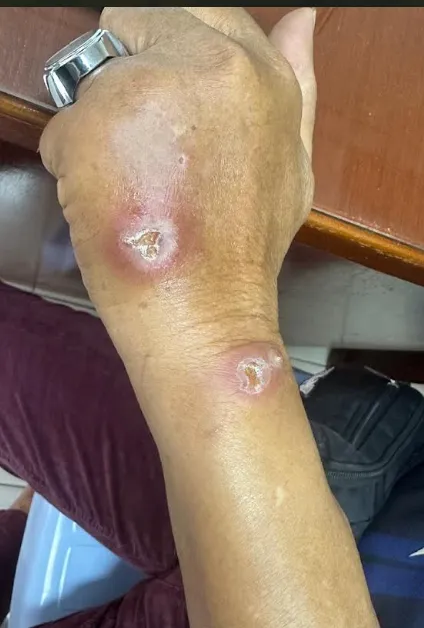
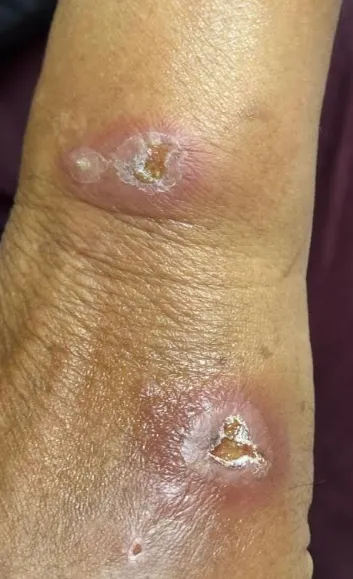
Fig. 5.1: Nodular ulcerating lesions on the forearm
Source: Courtesy of Dr. R. Anulvenna
Diagnosis
- Culture from lesion biopsy or pus.
- History of gardening trauma.
Treatment
- Itraconazole 200 mg daily for 3–6 months.
- Saturated potassium iodide orally, less commonly used.
4. Other Gardening-Related Infections
Section titled “4. Other Gardening-Related Infections”- Bacterial cellulitis: Commonly Staphylococcus aureus or Streptococcus species following skin breaks.
- Viral warts caused by HPV.
- Rare mycobacterial infections.
Bacterial cellulitis treatment
- Flucloxacillin 500 mg orally four times daily for 7 days.
- Clindamycin 300 mg orally thrice daily if penicillin allergic.
Multiple Choice Questions
Section titled “Multiple Choice Questions”Tap an answer to check yourself — the correct option and an explanation appear once you choose.
Q1 A 32-year-old woman has multiple itchy, annular scaly plaques on her forearms after gardening daily in humid weather for two weeks. She has no improvement with over-the-counter creams. Which oral treatment is appropriate?
Oral terbinafine 250 mg daily for 2–4 weeks is appropriate for tinea corporis that has failed topical therapy. Topical miconazole alone is insufficient for extensive or resistant disease. Hydrocortisone is a corticosteroid and would worsen a fungal infection. Ivermectin treats parasitic infections such as cutaneous larva migrans, not dermatophytosis.
Q2 A 24-year-old man presents with intensely itchy, serpiginous red tracks on his feet after working barefoot in a rubber plantation for 10 days. The lesions migrate daily. Which best describes these lesions?
Serpiginous (winding, snake-like) intensely pruritic tracks are the hallmark of cutaneous larva migrans, caused by hookworm larvae migrating through the epidermis. Pustular rash, large ulcers, and vesicular eruptions are not characteristic of this condition.
Q3 A 40-year-old gardener has slowly enlarging nodules and ulcerating lesions tracing up his forearm after pricking a finger with a rose thorn 2 months ago. What is the likely exposure cause?
Sporotrichosis is caused by Sporothrix schenckii, a fungus introduced into the skin via injury with plant material (thorns, splinters, sphagnum moss). The lymphocutaneous spread of nodules up the forearm after a rose-thorn prick is classic. Water exposure, animal bites, and sexual contact are not the typical route for this infection.
Q4 A 25-year-old traveller has pruritic serpiginous foot tracks after walking barefoot on a tropical beach in Malaysia. What is the preferred treatment?
A single oral dose of ivermectin 200 mcg/kg is first-line for cutaneous larva migrans and is highly effective. Itraconazole treats sporotrichosis and fungal infections. Flucloxacillin is a beta-lactam antibiotic used for bacterial cellulitis. Clotrimazole is an antifungal with no activity against hookworm larvae.
Q5 A 50-year-old man develops a spreading erythema and warmth over his hand after a puncture wound from gardening. What is the best initial antibiotic?
Oral flucloxacillin 500 mg four times daily is first-line for bacterial cellulitis, which is most commonly caused by Staphylococcus aureus or Streptococcus species after a skin breach. Topical clindamycin does not achieve tissue levels needed for cellulitis. Ivermectin is an antiparasitic. Ketoconazole is an antifungal.
OSCE Station
Section titled “OSCE Station”OSCE 1: Cutaneous Larva Migrans
Section titled “OSCE 1: Cutaneous Larva Migrans”Scenario: A 28-year-old man presents with a 2-week history of itchy, winding red tracks on his left foot after gardening barefoot. The lesions are intensely pruritic and have been extending progressively.
Task: Take a focused history, describe the examination findings, provide a diagnosis with pathophysiology, recommend investigations, and outline treatment.
Self-assess against checklist
Tick each point you covered, then check your score.
- Takes history focusing on symptom onset, barefoot soil/sand exposure, and progressive migration of lesions.
- Describes examination finding of serpiginous erythematous tracts on the foot.
- States diagnosis: cutaneous larva migrans (hookworm larva migrans).
- Explains pathophysiology: hookworm larvae penetrate skin and migrate in the epidermis, producing serpiginous tracks.
- States that diagnosis is clinical — biopsy is not required.
- Recommends treatment: oral ivermectin 200 mcg/kg once, or albendazole 400 mg daily for 3 days as an alternative.
- Advises on prevention: wear footwear when gardening or walking on potentially contaminated soil or sand.